Wednesday, June 3, 2015

Waterfront Dining In Miami: 12 Great Spots

Waterfront Dining In Miami: 12 Great Spots

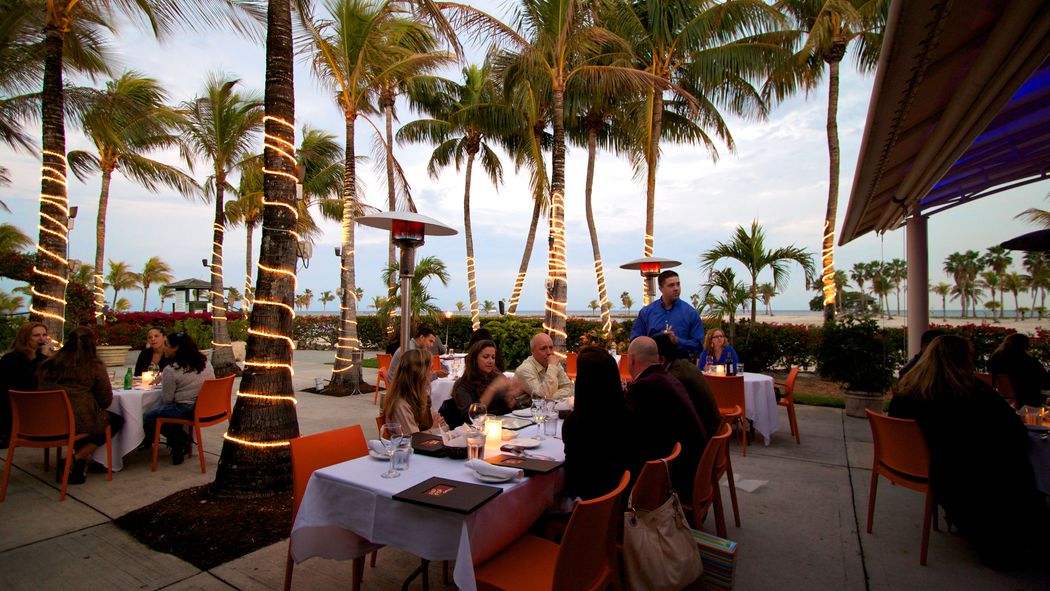
Our biggest request, after what are the must visit restaurants and where should I eat now, is where can we dine with some great water views? Surprisingly for a city that is built on the water this is harder to come up than one would think, but we've rounded up 12 solid spots in Miami with great views.
Did we miss your favorite spot? Make sure to voice your thoughts in the comments below.

1 Black Point Marina

This bar and restaurant located in South Dade serves up fresh seafood and plenty of boat gazing along in addition to its water views.
24775 SW 87th Ave
Cutler Bay, FL 33190
 
Harbor / Marina

2 Garcia's Seafood Grille & Fish

Eating seafood and water views go hand-in-hand and Garcia's is the perfect example of that. Grab a seat and soak up views of the Miami River while watching fishing boats drop off their latest catches for you to devour.
398 NW North River Dr
Miami, FL 33128
 

(305) 375-0765
Seafood Restaurant, $$$$

3 Gibraltar at Grove Isle

Located on a swanky private island just north of Coconut Grove provides some of the most serene waterfront views in the city complete with a fire pit and tiki torches.
4 Grove Isle Dr
Miami, FL 33133
 
(305) 860-4305
American Restaurant

4 La Mar by Gaston Acurio at Mandarin Oriental, Miami

The only acceptable way to indulge in ceviche by one of the world's best chefs is with killer water views. Luckily for you, La Mar offers up both.
500 Brickell Key Drive
Miami, FL 33131
 
(305) 913-8288
Peruvian Restaurant, $$$$

5 Lido Restaurant & Bayside Grill

Housed inside the always hip Standard Hotel, this popular spot is filled with people soaking in the pristine bay views under the restaurant's large colorful umbrellas while sipping rosé like it is water.
40 Island Ave
Miami Beach, FL 33139
 

(305) 673-1717
Mediterranean Restaurant, $$$$

6 Red Fish Grill

Tucked inside Matheson Hammock Park is known for its romantic ambiance and serene water views.
9610 Old Cutler Rd
Coral Gables, FL
 

(305) 668-8788
Seafood Restaurant, $$$$

7 Rusty Pelican (Miami)

This classic Key Biscayne restaurant has recently undergone some renovations, but one thing that has stayed intact is its expansive waterfront views and idyllic shots of Miami.
3201 Rickenbacker Cswy
Miami, FL 33149
 

(305) 361-3818
Seafood Restaurant, $$$$

8 Scotty's Landing

Rumors have swirled around for years that this Coconut Grove landmark will soon shutter. But, alas, it's still kicking — for how long we aren't entirely sure — with some of the best water views in the city.
3381 Pan American Dr
Miami, FL 33133
 
(305) 854-2626
Bar, $$$$

9 Seaspice

This celeb-filled hot spot has had its fair share of drama, name changes and turnovers, but one thing that has remained in place is its abundance of waterfront seating right along the Miami River.
422 NW North River Dr
Miami, FL 33128
 

(305) 440-4200
Seafood Restaurant, $$$$

10 Smith & Wollensky

One of the best places in Miami to catch the sunset, you'll find locals and tourists alike crowded around its popular bar nightly to take in the views and the ocean breezes.
1 Washington Avenue
Miami Beach, FL 33139
 

(305) 673-2800
Steakhouse, $$$$

11 Soho Bay

The Miami Beach newcomer features unobstructed views of the bay and Miami’s skyline, along with plenty of indoor and outdoor seating. And we're told coming later this year is a private boating dock and marina.
520 West Ave
Miami Beach, FL 33139
 
(786) 618-2788
Japanese Restaurant, $$$$

12 Zuma

Yes, people come from far and wide to dine on Zuma's famous sushi and high-end Asian cuisine but many hungry restaurant goers also come to enjoy their meal on the water with views of Downtown and Biscayne Bay.
270 Biscayne Boulevard Way
Miami, FL 33131
 
(305) 577-0277
Japanese Restaurant, $$$$

$750M Miami Worldcenter Hotel & Expo unveiled

$750M Miami Worldcenter Hotel & Expo unveiled

More than 600,000 square feet of meeting and convention space, 1,800 hotel rooms and $750 million.
Developers MDM Group, architects and community partners gathered on Tuesday to reveal plans for the Marriott Marquis Miami Worldcenter Hotel & Expo, slated to be the largest hotel in South Florida when it opens in the fall of 2018.
The expo center fronts the four large, curved towers that are “very dramatic and vertically oriented,” John Nichols, CEO of Nichols Brosch Wurst Wolfe & Associates, told The Real Deal. At night, the horizontal strips on the development will light up. NBWW is the architect on the project.
“Many don’t realize how big it is,” Nichols said, citing the Fontainebleau Miami Beach’s 1,500 rooms.
Exhibit space will include a 100,000-square-foot exhibit hall ground floor, a 65,000-square-foot main ballroom, a 45,000-square-foot junior ballroom, 390,000 square feet of other meeting space, and a 10,000-square-foot, 1,500-seat lecture hall — all for a total of 610,000 square feet.
The hotel will be located within steps of Miami Worldcenter’s shopping mall, which will include a Bloomingdale’s a and Macy’s. The 27-acre development, led by Nitin Motwani and Art Falcone, is within a quarter of a mile of proposed All Aboard Florida and Tri-Rail stations.
“All Aboard Florida is the linchpin,” Nicholas said. “This whole area is going through a massive change. We’re excited to be around it.”
Developers received approval from the city of Miami for the first phase, which will include the 765,000-square-foot mall, the 470 unit Paramount Miami Worldcenter condo tower and a newly announced apartment tower. Miami Worldcenter Associates will begin seeking building permits, with plans to break ground on the first phase later this year.
“This project is not only transformative to downtown Miami, but to the region as well,” Joe Herndon, director of development for MDM Group, said on Tuesday. “This development rivals, in scope and magnitude, major hotels and convention centers on a global [scale].”
The hotel and expo center will generate the need for an additional 2,400 hotel rooms in the area, Herndon said.
Bill Talbert, president and CEO of the Greater Miami Convention & Visitors Bureau, said the development will complement, not compete, with the planned Miami Beach Convention Center renovation and expansion, which includes an 800-room hotel. “These are complementary. Miami Beach has four halls, this has one. There are some folks who want to be in a downtown environment,” Talbert said.
The Marriott brand, he said, “is the No.1 brand in this community. Marriott sells.”
The hotel will offer 1,800 rooms on levels six through 54, and valet parking for 1,094 spaces.
“This property will be distinguished by the fact that it’s a Marriott Marquis, one of our most distinguished brands. When you mention Marriott Marquis to meeting planners, they know what that means,” Tom Papelian, senior vice president of hotel development for Marriott International, told TRD.
The hotel and expo component is expected to create more than 1,300 permanent jobs, $175 million in annual revenue and $14.8 million in annual city and county tax revenue through 2045.
RTKL is the interior design firm for the project, and Coastal Construction Tishman is the general contractor, according to a fact sheet. Coastal Co-President Tom C. Murphy said the company is actively involved in about 20 projects in South Florida, including Faena and Faena House, Surf Club Four Seasons Hotel and Private Residences, Porsche Design Tower and Fendi Chateau.

Wednesday, July 25, 2012

Friday, July 6, 2012

Tuesday, June 26, 2012

Friday, June 22, 2012

Monday, April 2, 2012

A1A's Top 100 Buildings in Florida

Check out this link to see the American Institute of Architects list of Top 100 Buildings in Florida!

http://www.aiafltop100.org/building.cfm?idsBuilding=1

Friday, January 6, 2012

Sunscreens Exposed: 9 surprising truths

CHECK OUT THIS ARTICLE OBTAINED FROM:

http://breakingnews.ewg.org/2011sunscreen/sunscreens-exposed/sunscreens-exposed-9-surprising-truths/

Sunscreens Exposed: 9 surprising truths

Sunscreens prevent sunburns, but beyond that simple fact surprisingly little is known about the safety and efficacy of these ubiquitous creams and sprays. FDA’s failure to finalize its 1978 sunscreen safety standards both epitomizes and perpetuates this state of confusion. EWG’s review of the latest research unearthed troubling facts that might tempt you to give up on sunscreens altogether. That’s not the right answer – despite the unknowns about their efficacy, public health agencies still recommend using sunscreens, just not as your first line of defense against the sun. At EWG we use sunscreens, but we look for shade, wear protective clothing and avoid the noontime sun before we smear on the cream. Here are the surprising facts:

1. There’s no consensus on whether sunscreens prevent skin cancer.

The Food and Drug Administration’s 2007 draft sunscreen safety regulations say: “FDA is not aware of data demonstrating that sunscreen use alone helps prevent skin cancer” (FDA 2007). The International Agency for Research on Cancer agrees. IARC recommends clothing, hats and shade as primary barriers to UV radiation and writes that “sunscreens should not be the first choice for skin cancer prevention and should not be used as the sole agent for protection against the sun” (IARC 2001a). Read more.

2. There’s some evidence that sunscreens might increase the risk of the deadliest form of skin cancer for some people.

Some researchers have detected an increased risk of melanoma among sunscreen users. No one knows the cause, but scientists speculate that sunscreen users stay out in the sun longer and absorb more radiation overall, or that free radicals released as sunscreen chemicals break down in sunlight may play a role. One other hunch: Inferior sunscreens with poor UVA protection that have dominated the market for 30 years may have led to this surprising outcome. All major public health agencies still advise using sunscreens, but they also stress the importance of shade, clothing and timing. Read more.

3. There are more high SPF products than ever before, but no proof that they’re better.

In 2007 the FDA published draft regulations that would prohibit companies from labeling sunscreens with an SPF (sun protection factor) higher than “SPF 50+.” The agency wrote that higher values were “inherently misleading,” given that “there is no assurance that the specific values themselves are in fact truthful…” (FDA 2007). Scientists are also worried that high-SPF products may tempt people to stay in the sun too long, suppressing sunburns (a late, key warning of overexposure) while upping the risks of other kinds of skin damage.

Flaunting FDA’s proposed regulation, companies substantially increased their high-SPF offerings in 2011. Nearly one in five products now lists SPF values higher than “50+”, compared to only one in eight in 2009, according to EWG’s analysis of more than 600 beach and sport sunscreens. Among the worst offenders are Walgreens and CVS stores and Neutrogena. Walgreens’ boasts of SPF higher than “50+” on nearly half of its sunscreens; CVS and Neutrogena make the same misleading claim on about a third of theirs. Read more.

4. Too little sun might be harmful, reducing the body’s vitamin D levels.

Adding to the confusion is the fact that sunshine serves a critical function in the body that sunscreen appears to inhibit — production of vitamin D. The main source of vitamin D in the body is sunshine, and the compound is enormously important to health – it strengthens bones and the immune system, reduces the risk of various cancers (including breast, colon, kidney, and ovarian cancers) and regulates at least 1,000 different genes governing virtually every tissue in the body (Mead 2008). Over the last two decades, vitamin D levels in the U.S. population have been decreasing steadily, creating a “growing epidemic of vitamin D insufficiency” (Ginde 2009a). Seven of every 10 U.S. children now have low levels. Those most likely to be deficient include children who are obese or who spend more than four hours daily in front of the TV, computer or video games (Kumar 2009).

Experts disagree on the solution. The American Medical Association has recommended 10 minutes of direct sun (without sunscreen) several times a week (AMA 2008), while the American Academy of Dermatology holds that “there is no scientifically validated, safe threshold level of UV exposure from the sun that allows for maximal vitamin D synthesis without increasing skin cancer risk” (AAD 2009). Vitamin D supplements are the alternative, but there is debate over the proper amount. The Institute of Medicine has launched new research to reassess the current guidelines. In the meantime, your doctor can test your vitamin D levels and give advice on sunshine versus supplements. Read more.

5. The common sunscreen ingredient vitamin A may speed the development of cancer.

Recently available data from an FDA study indicate that a form of vitamin A, retinyl palmitate, when applied to the skin in the presence of sunlight, may speed the development of skin tumors and lesions (NTP 2009). This evidence is troubling because the sunscreen industry adds vitamin A to 30 percent of all sunscreens.

The industry puts vitamin A in its formulations because it is an anti-oxidant that slows skin aging. That may be true for lotions and night creams used indoors, but FDA recently conducted a study of vitamin A’s photocarcinogenic properties, the possibility that it results in cancerous tumors when used on skin exposed to sunlight. Scientists have known for some time that vitamin A can spur excess skin growth (hyperplasia), and that in sunlight it can form free radicals that damage DNA (NTP 2000).

In FDA’s one-year study, tumors and lesions developed up to 21 percent sooner in lab animals coated in a vitamin A-laced cream (at a concentration of 0.5%) than animals treated with a vitamin-free cream. Both groups were exposed to the equivalent of just nine minutes of maximum intensity sunlight each day.

It’s an ironic twist for an industry already battling studies on whether their products protect against skin cancer. The FDA data are preliminary, but if they hold up in the final assessment, the sunscreen industry has a big problem. In the meantime, EWG recommends that consumers avoid sunscreens with vitamin A (look for “retinyl palmitate” or “retinol” on the label). Read more.

6. Free radicals and other skin-damaging byproducts of sunscreen.

Both UV radiation and many common sunscreen ingredients generate free radicals that damage DNA and skin cells, accelerate skin aging and cause skin cancer. An effective sunscreen prevents more damage than it causes, but sunscreens are far better at preventing sunburn than at limiting free radical damage. While typical SPF ratings for sunburn protection range from 15 to 50, equivalent “free radical protection factors” fall at only about 2. When consumers apply too little sunscreen or reapply it infrequently, behaviors that are more common than not, sunscreens can cause more free radical damage than UV rays on bare skin. Read more.

7. Pick your sunscreen: nanomaterials or potential hormone disruptors.

The ideal sunscreen would completely block the UV rays that cause sunburn, immune suppression and damaging free radicals. It would remain effective on the skin for several hours and not form harmful ingredients when degraded by UV light. It would smell and feel pleasant so that people use it in the right amount and frequency.

Unsurprisingly, there is currently no sunscreen that meets all of these criteria. The major choice in the U.S. is between “chemical” sunscreens, which have inferior stability, penetrate the skin and may disrupt the body’s hormone systems, and “mineral” sunscreens (zinc and titanium), which often contain micronized- or nano-scale particles of those minerals.

After reviewing the evidence, EWG determined that mineral sunscreens have the best safety profile of today’s choices. They are stable in sunlight and do not appear to penetrate the skin. They offer UVA protection, which is sorely lacking in most of today’s sunscreen products. Mexoryl SX (ecamsule) is another good option, but it’s sold in very few formulations. Tinosorb S and M could be great solutions but are not yet available in the U.S. For consumers who don’t like mineral products, we recommend sunscreens with avobenzone (3 percent for the best UVA protection) and without the notorious hormone disruptors oxybenzone or 4-MBC. Scientists have called for parents to avoid using oxybenzone on children due to penetration and toxicity concerns. Read more.

8. Europe’s better sunscreens.

Sunscreen makers and users in Europe have more options than in the United States. In Europe, sunscreen makers can select from among 27 chemicals for their formulations, compared to 17 in the U.S. Companies selling in Europe can add any of seven UVA filters to their products, but have a choice of only three when they market in the U.S. European sunscreens could earn FDA’s proposed four-star top rating for UVA protection, while the best U.S. products would earn only three stars. Sunscreen chemicals approved in Europe but not by the FDA provide up to five times more UVA protection; U.S. companies have been waiting five years for FDA approval to use the same compounds. Last but not least, Europeans will find many sunscreens with strong (mandatory) UVA protection if proposed regulations in Europe are finalized. Under FDA’s current proposal, Americans will not. Read more.

9. The 34th summer in a row without final U.S. sunscreen safety regulations.

In the United States, consumer protection has stalled because of the FDA’s 33-year effort to set enforceable guidelines for consumer protection. EWG has found a number of serious problems with existing sunscreens, including overstated claims about their perfomance and inadequate UVA protection. Many of these will be remedied if and when the FDA’s proposed sunscreen rule takes effect. But even after the rule is enacted, gaps will remain. FDA does not consider serious toxicity concerns such as hormone disruption when approving new sun filters. The new rules would also still allow sunscreen makers to use ingredients like vitamin A that can damage the skin in sunlight, and would fail to require makers to measure sunscreen stability despite ample evidence that many products break down quickly in sunlight. Read more.

Monday, October 24, 2011

The Miami Herald: Shade Sail Maker Gets Second Wind

Check out this article written by The Miami Herald on ShadeFla.

The link is as follows:
http://www.miamiherald.com/2011/10/23/2467278_p2/shade-sail-maker-gets-second-wind.html

This article chronicles our business makeover given to us by The Miami Herald and Score Miami. We hope you find the tips to organize your business as helpful as we did!

Enjoy!

Wednesday, October 19, 2011

Resysta - The Better Wood!


Just found out about a new material called Resysta.

It is dubbed "The Better Wood" and boasts its durable and sustainable nature! It is composed of rice husks, common salt and mineral oil, allowing it to be environmentally friendly and extremely weather resistant against sun, rain, snow and salt water.

If that isn't enough, Resysta requires very minimal care and offers the look and feel of wood.

It is the "wood" of the future! It doesn't fluctuate in size over time due to humidity, it is water resistant and cannot be damaged by insects and fungi. With Resysta, cracks and splinters are a thing of the past. Great for outdoor furniture, floor coverings, decks of ships, house facades, wellness and wet areas!

For more information, check out the website:
http://www.resysta.com/what-is-resysta.html

Hope you enjoy!

Tuesday, October 18, 2011

October 2011: New Installations

October 2011


ShadeFla: New Installations

Mandarin Oriental Hotel on Brickell
Custom Tensioned Sails:
Tensioned sails are made custom to suit the specific area that needs to be covered. They use a commercial grade durable fabric that blocks 95% of the sun's harmful rays. They can be affixed to existing structures or securely fastened to a wall or support column.


Surfside Community Center
Shade Structures:
Custom shade structures are made with steel columns and commercial grade fabric that is durable and can withstand hurricane force winds. Shade structures are sleek and provide function and style.


Salsa Fiesta Restaurant in Pembroke Pines
Caravita Amalfi Umbrella:
The Amalfi cantilever umbrella has a powerful arm that lifts its shade high above any outdoor area. Floating freely and offering an unobtrusive view with its sleek design, the Amalfi follows the sun and protectively provides shade throughout the day.


For more information on shade sails, canopies,
high wind umbrellas and other shade products,
please visit www.ShadeFla.com
or contact Margueritte Ramos at
305-389-7444 or Margueritte@ShadeFla.com
to request a free quote!


Twitter: @ShadeFla
Facebook: http://www.facebook.com/pages/Shade-Fla/300452308719


We look forward to working with you!

Sincerely,

Margueritte Ramos
ShadeFla President
305-389-7444 cell
305-759-7423 office
888-593-2018 fax
Margueritte@ShadeFla.com
www.ShadeFla.com

Monday, September 26, 2011

Lodging Industry Again Investing in Upgrades

Check out this article from the Miami Herald about the Hotel Industry's increase in renovations!

Follow this link:

http://www.miamiherald.com/2011/09/18/2405682/lodging-industry-again-investing.html#storylink=misearch

Enjoy!

Tuesday, July 26, 2011

Article on Increase in Hotel Occupancy in Miami in June!

Check out this article on the increase in hotel occupancy in Miami for the month of June! Enjoy!

Follow this link: http://www.miamiherald.com/2011/07/22/2326760/south-florida-hotels-showed-improvement.html

Thursday, July 21, 2011

Check Out This Aerial Image of Our Sun Square Products!

Check out this areial image of one of our Sun Square retractable sails installations! This is an image of the Betsy Hotel on Ocean Drive. We installed two Sun Square retractable sails there. Enjoy!


Below are pictures of the sails:


Monday, July 18, 2011

The Miami Herald: Keep Cool and Stay Safe

Check out this link to an article in The Miami Herald about staying safe while working outdoors!


Here is the link:
http://www.miamiherald.com/2011/07/12/2311428/for-south-florida-workers-a-lesson.html


Enjoy!